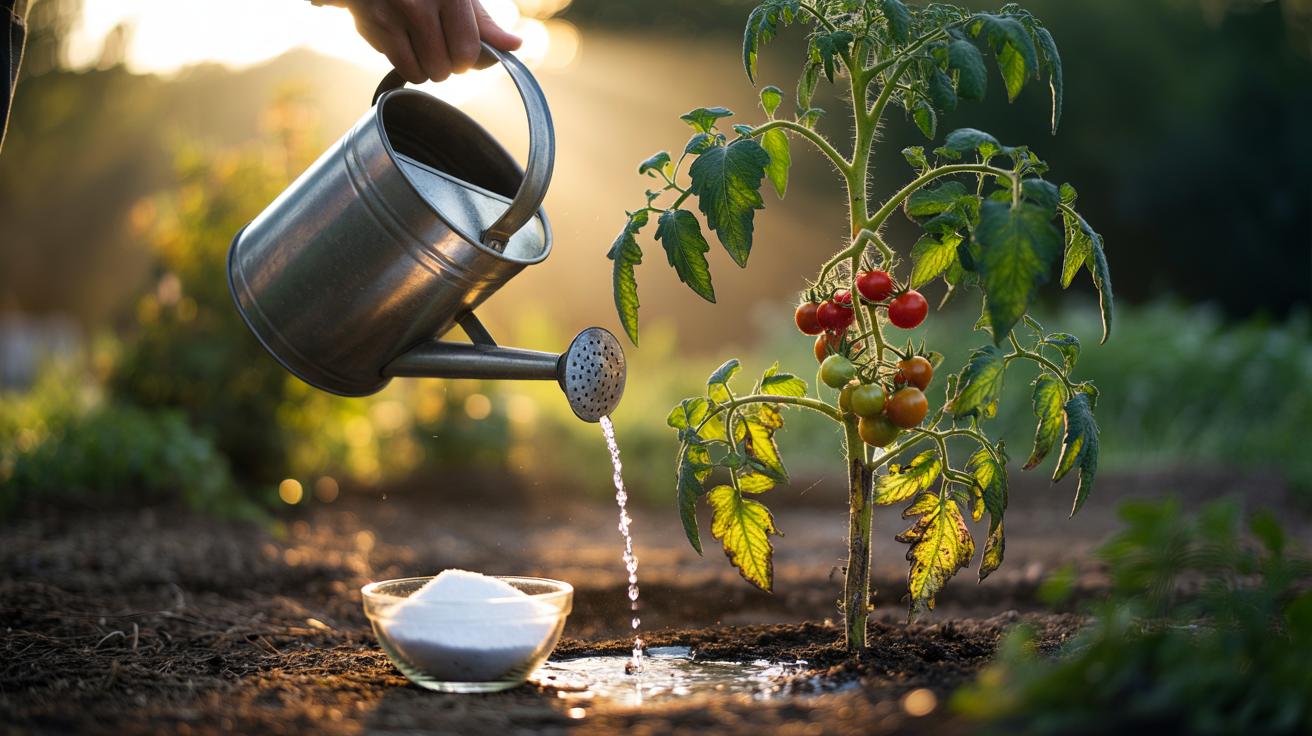
In a nutshell
- 🌿 Epsom salt (magnesium sulphate) restores chlorophyll and reverses interveinal chlorosis on older leaves, turning yellow foliage green in as little as 2–3 days when magnesium deficiency is the true cause.
- 🧪 Apply safely: root-zone soak at 1–2 tbsp per 4 litres of water; foliar spray at 1 tbsp per 4 litres in cool hours; avoid overuse and remember the rule: test, then treat.
- 🔎 Diagnose before dosing: magnesium shows on older leaves; uniform paleness signals nitrogen issues; new leaf yellowing points to iron lockout; brown sunken fruit tips indicate blossom end rot—Epsom won’t fix those.
- ⚖️ Pair the soak with smart care: maintain soil pH 6.2–6.8, use balanced feeds (avoid chronic high-potash), mulch and water deeply to stabilise moisture—especially in containers, growbags, or coir.
- 🍅 Expect results: greener leaves power heavier trusses, steadier fruit set, and better flavour—when used as a targeted fix, not a cure-all; consider trialling on one plant to compare yield and vigour.
Yellow leaves on tomato vines are every grower’s dread. The good news is that a targeted Epsom salt soak can turn a languishing plant into a steady producer, and it often works fast. We’re talking about simple magnesium sulphate, a grocery-shelf staple that restores the engine of photosynthesis when soils or feeds have left plants short. Apply it correctly and you’ll see greener foliage, tighter trusses, and fruit that sets and swells with confidence. Apply it indiscriminately and you’ll waste time—and possibly stress your soil. Use Epsom salt as a precise fix, not a cure-all. Here’s how magnesium repairs those yellow leaves, and how to soak for results.
Why Magnesium Turns Yellow Leaves Green in Days
Magnesium sits at the heart of chlorophyll, the pigment that captures light. When tomatoes run short, the plant cannibalises older leaves to feed the new, causing classic interveinal chlorosis: yellow between veins while the veins remain green. It’s a mobile nutrient, so lower leaves suffer first. Energy plummets, sugar transport stutters, and fruit fill lags. That’s why a modest magnesium top-up can seem almost miraculous—because it restores the very machinery of photosynthesis.
Epsom salt—chemically magnesium sulphate (MgSO₄)—delivers two secondary nutrients in one go. The magnesium rebuilds chlorophyll; the sulphur supports protein formation and flavour compounds that make tomatoes taste like tomatoes. In soils pushed hard with high-potash tomato feeds, magnesium can be crowded out at the root surface; the right soak resets that balance. Foliar uptake is especially rapid: a fine spray of diluted Epsom solution can reach chloroplasts within hours, with visible greening within two to three days if deficiency is the true culprit. When the symptom matches the cause, the turnaround is swift; when it doesn’t, no amount of Epsom will help.
The Epsom Salt Soak: Recipes, Timing, and Safe Rates
For a quick rescue, prepare a root-zone soak: dissolve 1–2 tablespoons (15–30 g) per 4 litres of water (roughly 1 US gallon). Drench the soil slowly around each plant—about 1 litre for a young plant, up to 2 litres for a mature vine—until evenly moist. Container tomatoes love bottom watering: stand the pot in a tray of solution for 20–30 minutes, then drain thoroughly. More is not better; keep to these rates to avoid salt stress.
Need a fast visible lift? Use a foliar spray at 1 tablespoon per 4 litres, misting both sides of the leaves in the cool of early morning or evening. Expect improvement in 48–72 hours if magnesium deficiency is present. For maintenance on magnesium-hungry soils, repeat a soil drench once every 3–4 weeks during heavy fruiting. Always water the day before in hot spells to prevent root burn, and never spray in full sun. If your soil already tests high in magnesium—or is calcareous—skip the soak and focus on balanced feeding instead. Test, then treat; it saves money and plants.
Diagnosing True Magnesium Deficiency in Tomatoes
Not every yellow leaf is a call for Epsom salt. Accurate diagnosis saves you from chasing the wrong solution. Look first at where symptoms start: magnesium deficits show on older leaves low on the plant, with sharp green veins over a yellow background, sometimes with leaf margins curling upwards. Uniform paleness across the plant points to nitrogen issues; yellowing of brand-new growth suggests iron lockout; leathery brown, sunken tips on fruit scream calcium deficiency—and Epsom will not fix that. Treat the cause, not the colour.
| Symptom | Likely Cause | Epsom Helps? | Expected Speed |
|---|---|---|---|
| Older leaves yellow between green veins | Magnesium deficiency | Yes | 2–7 days (foliar faster) |
| New leaves yellow, veins pale too | Iron deficiency/high pH | No | n/a |
| Whole plant pale, slow growth | Nitrogen deficiency | No | n/a |
| Brown sunken patch at blossom end | Calcium deficiency/irregular watering | No | n/a |
| Leaf edges scorched, soil salty | Over-fertilisation | No | n/a |
If your pattern doesn’t match magnesium, reach for a different fix—adjust pH, feed nitrogen, or regularise watering—before you soak.
From Soak to Heavy Crops: Pairing Magnesium With Smarter Care
An Epsom soak is a tool, not a programme. Pair it with fundamentals and yields climb. Keep soil pH at 6.2–6.8 for optimum nutrient uptake. Use a balanced tomato feed; constant high-potash regimes can induce antagonism and trigger magnesium shortfalls. Mulch to steady moisture, then water deeply and less often to prevent the feast-and-famine cycles that stress roots. Healthy roots make the most of every gram of magnesium you add.
Don’t confuse problems: blossom end rot is about calcium and erratic watering, not magnesium. If you grow in growbags or coir, magnesium is more likely to run short; plan a light, regular supplement instead of emergency soaks. Aim for leafy, not lush: an overfed plant will chase foliage at the expense of fruit. With chlorophyll restored, the plant converts light into sugars efficiently, filling trusses with conviction and maintaining flavour. Expect steadier sets, firmer fruit, and fewer mid-season slumps. The secret isn’t magic salt—it’s targeted nutrition applied at the right moment.
Epsom salt can be the jolt that wakes a tired tomato, but only when the symptoms point squarely to magnesium deficiency. Respect the rates, diagnose with care, and fold the soak into a wider routine of balanced feeding, sensible watering, and pH management. That’s how a quick fix becomes a season-long lift, with greener leaves powering heavier, tastier harvests. Ready to mix a measured soak and put it to the test on a single plant this week—then compare the difference with its neighbour?
Did you like it?4.4/5 (22)