In a nutshell
- 🧼 The rice shake trick turns uncooked rice, warm water, and a drop of washing-up liquid or bicarbonate of soda into hundreds of tiny scrubbers that safely scour narrow bottles.
- 🧪 It’s controlled abrasion plus smart fluid motion: lowered surface tension and swirling vortices lift biofilm, tannin rings, and smoothie sludge without scratching glass.
- 🛠️ Method: add 1–2 tbsp rice, fill 1/3–1/2 with warm water, add a drop of detergent or 1 tsp bicarb, cap, shake 60–90 seconds, inspect, repeat if needed, then rinse thoroughly.
- 🌾 Choose short-grain for broad scrubbing or long-grain for crevices; use white vinegar sequentially for limescale; avoid sticky varieties and protect decals/coatings.
- 🌍 It’s eco-friendly and inexpensive, but not sterilisation—clean first, then sanitise when required; check for cracks, shake over a sink, and air-dry inverted.
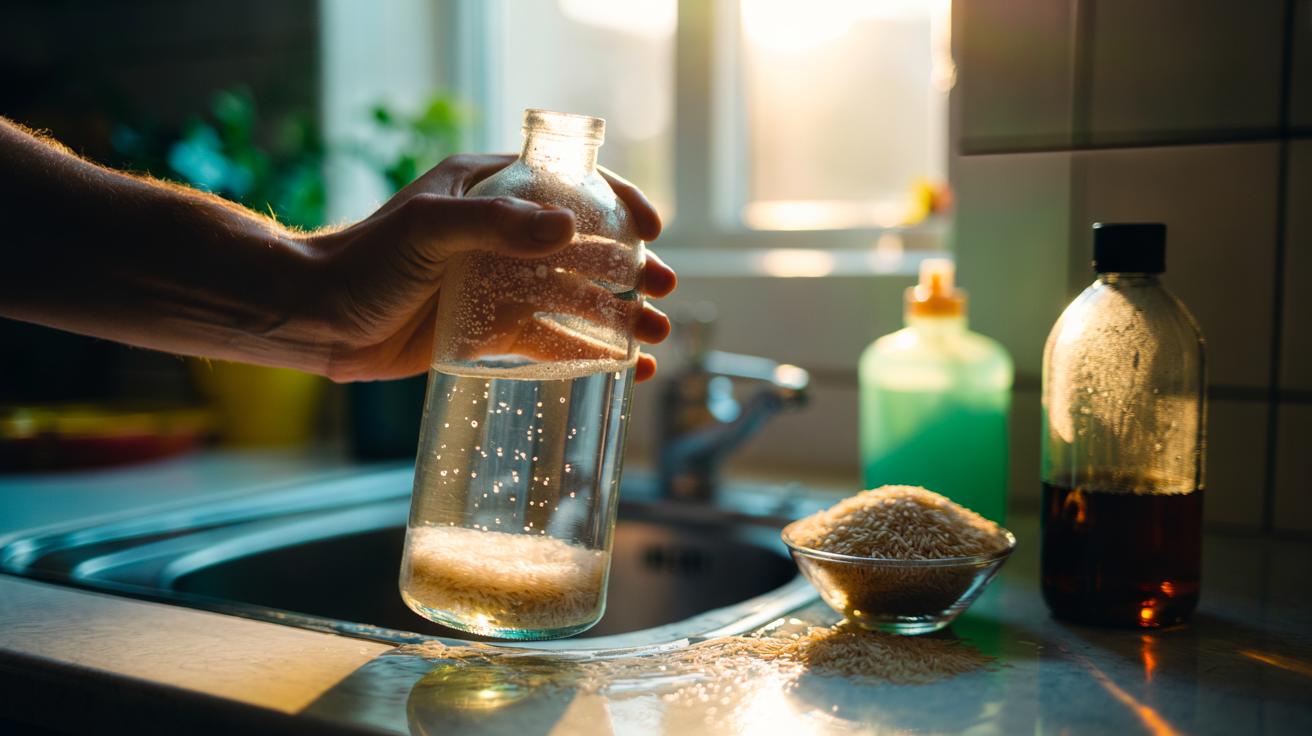
Forgotten bottles lurk at the back of cupboards, stained with coffee ghosts or smoothie sludge that won’t budge. A brush won’t fit. A dishwasher can’t reach. Enter a humble hero: uncooked rice. When shaken with warm water and a touch of washing-up liquid or bicarbonate of soda, those grains act like hundreds of tiny scrubbers. They scour the corners your sponge can’t see. The trick is cheap, quick, oddly satisfying. And crucially, it’s gentle on glass. In a minute or two, even stubborn films release, swirl away, and the bottle looks newly bought. It’s a small domestic victory with a surprisingly smart science behind it.
How the Rice Shake Works Inside Narrow Bottles
The magic is mechanical. Each grain of rice becomes a miniature abrasive that’s softer than glass but tougher than dried residue. As you shake, grains ricochet along the interior, breaking up biofilm and tannin stains. Energy transfers as collisions. Water cushions the action, while a drop of surfactant lowers surface tension so liquid can slip under grime and lift it off the wall. The result is controlled abrasion with fluid assistance. Think of it as a wet tumble-polish happening in a very confined space.
Physics plays a quiet role. A vigorous shake sets up swirling vortices; grains sweep through boundary layers that normally protect residue, disrupting the “shield” that lets films cling. The neck of the bottle focuses the flow, upping shear forces where brushes can’t reach. Because rice is relatively lightweight, it tumbles rather than gouges, so glass stays safe while sticky proteins, sugars, and tea pigments surrender. Warm water adds softening power, expanding dried gunk for easier dislodging. For plastics, the action remains gentle enough for most bottles, though very soft, cloudy plastics may mark—test briefly first. The sweet spot is lively shaking, not violent thrashing.
Step-By-Step Method and Pro Tips
Start simple. Add one to two tablespoons of uncooked rice to an empty bottle. Pour in warm water to a third or half full. Add either one small drop of washing-up liquid or a teaspoon of bicarbonate of soda for odours. Cap tightly. Now shake. Short, sharp bursts, then a slow roll to sweep the base. Rotate the bottle to chase stubborn crescents below the shoulder and around the punt. Within 60–90 seconds the water will cloud as residue lifts. Stop, inspect against light, repeat if needed—usually once is enough.
Drain through a strainer to catch the grains (they can be binned or composted if clean). Rinse thoroughly until no slick or scent remains. For labels or sticky glue, a pre-soak in warm water with a splash of vinegar helps. Avoid boiling water in cold glass to prevent thermal shock. Don’t overfill; too much water weakens the scrubbing because grains can’t accelerate. Too little water makes clumping. Aim for a moving slurry. For long, slender carafes, shake vertically and horizontally to hit both base and neck. When you hear a lively rattle, you’ve got the mix just right.
Choosing the Right Grain and Helpful Add-Ins
Not all grains behave the same. Rounder, heavier rice scrubs broadly; long, slender rice reaches crevices. Brown rice adds a little texture from the bran but can shed flecks, so rinse well. If you’re out of rice, coarse salt or cracked barley can substitute in a pinch, though salt dissolves and loses bite. Pair grains with cleaners that tackle your specific mess—grease, tannins, or odour. The goal is a balanced slurry: enough grit to scour, enough liquid to flow, and the right helper to cut through the chemistry of the stain.
| Grain/Add-In | Best For | Notes | Bottle Types |
|---|---|---|---|
| Short-grain rice | General film, smoothie residue | Good broad contact; resists lodging | Wine bottles, flasks |
| Long-grain rice | Tannin rings, neck grime | Slides into tight curves | Oil cruets, narrow carafes |
| Bicarbonate of soda | Odours, light staining | Mild alkali; gentle deodoriser | Baby-friendly containers |
| White vinegar | Limescale spots | Use after rice, then rinse | Kettles, hard-water areas |
Avoid sticky varieties that turn gluey, as they dampen friction. Don’t mix vinegar and bicarb in the bottle unless you like foam; use sequentially. For very delicate ceramic linings, test with a brief, gentle shake first. Most household glass laughs off rice abrasion, but coatings and decals deserve caution.
Safety, Hygiene, and Eco Advantages
This trick punches above its weight environmentally. It revives reusable glass bottles, cuts reliance on disposable brushes, and uses minimal water. Rice is biodegradable and inexpensive. You control the chemistry—no harsh solvents, no microplastic beads. It’s a small, domestic nudge toward a cleaner, circular habit. There are hygiene caveats. The rice method removes deposits but is not sterilisation. For items that must be sanitised, perform the rice clean first, then use an appropriate sanitising step and a thorough rinse. Let bottles air-dry inverted to discourage musty smells and regrowth of biofilm.
Safety is common sense. Check glass for hairline cracks before shaking; pressure and collision can worsen flaws. Keep caps tight to prevent messy eruptions. Don’t use near laptops or paperwork—shake over a sink. For heavy decanters, grip with a tea towel for traction. If rice gets stuck in a deeply punted base, add more water, swirl, and coax it out; never probe with metal tools that could scratch. Compared with soaking overnight or buying niche brushes, the method saves time, money, and storage space. It turns an awkward cleaning job into a 90-second routine you’ll actually repeat.
The rice shake trick feels like alchemy, but it’s really controlled abrasion powered by smart fluid motion and a pinch of chemistry. It rescues stained glass, banishes funk, and gives reusable bottles a new lease of life without faff or fuss. Once you’ve tried it, you’ll eye every narrow-necked vessel with newfound confidence. Your cupboard gets cleaner. Your bin gets lighter. Simple, low-cost, effective—exactly the kind of household fix we love to pass on. What stained bottle is lurking in your kitchen right now, and how will you mix your first perfect scrubbing slurry to bring it back?
Did you like it?4.5/5 (25)