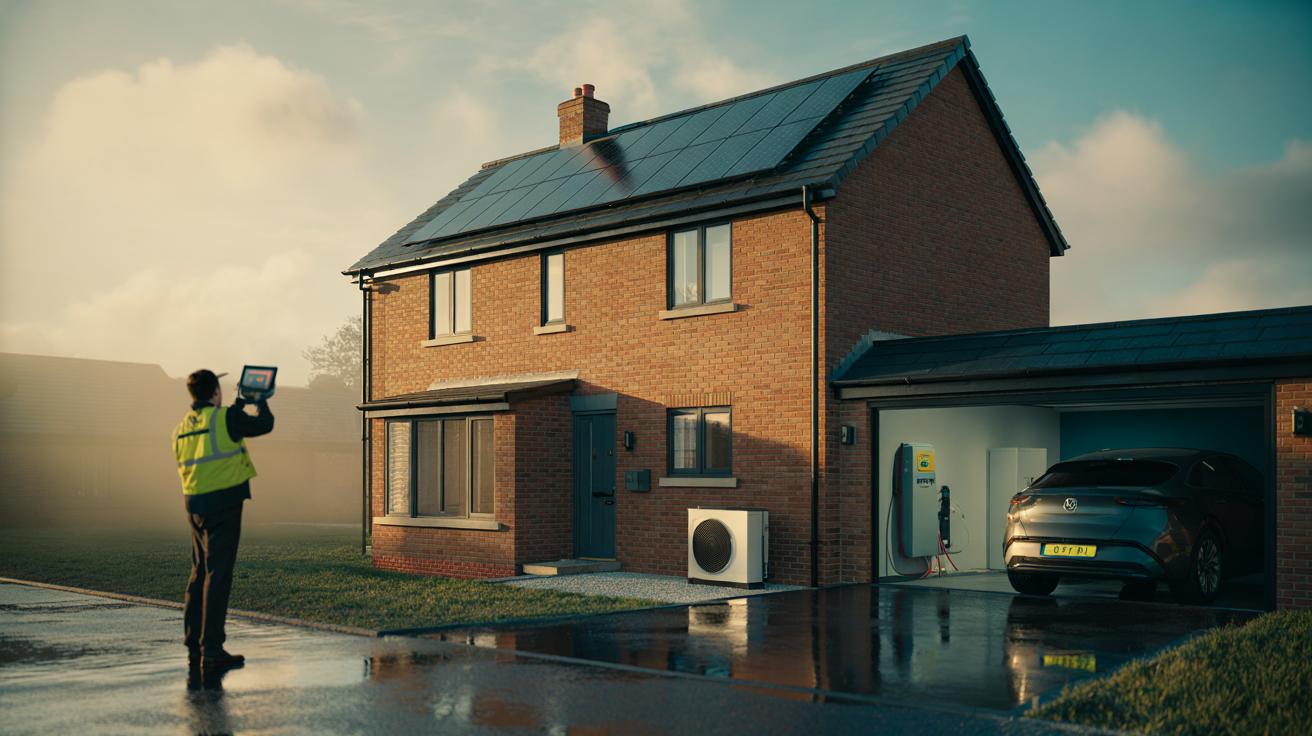
In a nutshell
- 🔍 Start with an audit: get a EPC, heat-loss survey, and smart meter baseline; deploy quick wins like LEDs, draught-proofing, and TRVs to lift comfort and nudge your EPC upward.
- 🧱 Prioritise fabric first: top up loft and wall insulation, improve airtightness, and add controlled ventilation (e.g., MVHR) to cut heat demand and set the stage for efficient low-carbon heating.
- 🔥 Upgrade heat smartly: install a right-sized air-source heat pump (or hybrid), use weather compensation, larger emitters where needed, and zoned smart controls; tap the Boiler Upgrade Scheme to reduce upfront cost.
- ☀️ Harvest power: fit solar PV and a home battery, use the Smart Export Guarantee, and sync EV charging and hot water with sunshine or off-peak tariffs—document generation and warranties to reassure buyers.
- 💷 Make the numbers work: stack grants, 0% VAT, and green mortgages; keep a retrofit logbook to prove performance, boost buyer confidence, and support a higher valuation.
Britain’s homes guzzle energy, and buyers are noticing. If you want to cut carbon and lift resale value, you don’t need a gold-plated eco-mansion. You need a plan. The expert-approved approach starts with evidence, prioritises “fabric first” measures, then layers smart tech and financing that make payback real. Done right, these steps can trim bills, raise your EPC rating, and make your listing stand out on Rightmove. Start with a survey, not a gadget. Then commit to upgrades that perform during winter peaks, not just in brochures. Here is how to green your home—and boost its market value—at the same time.
Audit First: EPC, Heat Loss, and Quick Wins
The most valuable sustainability upgrade is often clarity. Commission a qualified EPC assessment, and—if budget allows—a home energy survey using thermal imaging and an air-leak test. These pinpoint where heat escapes and which rooms suffer. Evidence-driven sequencing prevents expensive missteps. You’ll know whether leaky loft hatches, under-insulated eaves, or tired glazing is the real culprit. Pair this with a month of smart meter data to establish a baseline and identify night-time wastage.
Quick wins still matter. Fit LEDs, seal chimneys with removable balloons, and add draught-proofing to floorboards and letterboxes. Install thermostatic radiator valves (TRVs) and set room-by-room temperatures. Program your hot water cylinder to match actual usage. These low-cost tweaks can shave 5–10% off annual energy and produce visible comfort gains. Small fixes also lift your EPC score, nudging buyers’ filters in your favour. Crucially, bank the savings data; before-and-after meter screenshots are persuasive at valuation time and during viewings.
Insulation and Airtightness: The Unseen Upgrades Buyers Pay For
Ask any retrofit coordinator: fabric first is the linchpin. Topping up loft insulation to around 270 mm, sealing the loft hatch, and ensuring continuous coverage around downlighters dramatically stabilise winter temperatures. Where suitable, cavity wall insulation is a fast, high-return measure. For solid-wall homes, consider internal or external wall insulation, designed to manage moisture safely. Insulation works 24/7; gadgets do not. Buyers rarely see it, but they feel it within minutes of a viewing—and surveyors notice the improved EPC banding.
Airtightness complements insulation. Target obvious leakage paths—suspended timber floors, skirtings, service penetrations—then add controlled ventilation. Trickle vents or a well-designed MVHR system maintain indoor air quality without heat loss. In many homes, a simple membrane under floorboards and perimeter sealing deals with draughts that radiators can never defeat. The value case? Warm, quiet rooms, lower bills, and a credible path to a future heat pump. Fabric upgrades cut the size and cost of any new heating system, which surveyors and switched-on buyers translate into reduced running costs and better long-term resilience.
Low-Carbon Heating: Heat Pumps, Hybrids, and Smart Controls
Once the fabric is sorted, tackle heat. A modern air-source heat pump (ASHP) delivers three or more units of heat per unit of electricity and can replace a boiler in many UK homes. The trick is design: correct sizing, weather compensation, larger radiators or underfloor as needed, and proper hydraulic balancing. Choose reputable, MCS-certified installers and request a predicted seasonal COP so you understand performance. Right-sizing beats oversizing every time. If your property still needs high flow temperatures, a hybrid system (boiler plus small ASHP) can be a pragmatic stepping stone.
Controls pull it together. Use zoned smart thermostats, learning schedules, and occupancy detection to trim waste. Add a hot water cylinder with good insulation for low-carbon, off-peak heating and legionella-safe cycles. In England and Wales, the Boiler Upgrade Scheme currently offers grants up to £7,500 for eligible heat pumps, easing capital costs. Agents increasingly flag low-carbon systems in listings, while lenders offer green mortgages for better EPCs. Lower bills, quieter operation, and future-proofed compliance resonate with buyers and valuers alike.
Power From Your Roof: Solar PV, Batteries, and Agile Tariffs
Solar is the UK retrofit success story. A 4–6 kWp solar PV array, sized to daytime loads, slashes imported electricity and stabilises bills for 20+ years. Pair with a 5–10 kWh home battery to capture surplus generation and arbitrage cheap night rates. Opt for MCS certification and an export meter to access the Smart Export Guarantee (SEG). Even modest export payments improve payback, while buyers like the independence and visible roof hardware. Documented generation data sells the system, not just the panels.
To maximise returns, shift flexible loads. Time the dishwasher, EV charging, and hot water heating to align with sunshine or off-peak tariffs. Consider an EV charger integrated with PV and battery controls for automatic optimisation. Roof orientation and shading analysis is essential—use inverter monitoring apps to prove yields. On valuation day, present annual generation, warranty terms (panels, inverter, workmanship), and DNO approvals. The result: a credible low-carbon power plant on your roof, lower running costs, and a meaningful nudge up the quality ladder buyers recognise.
Finance and Grants in the UK: Make the Numbers Work
Greening a home is capital intensive, but the UK offers levers to make it add up. Start with grants: the Boiler Upgrade Scheme (England & Wales) supports heat pumps; ECO4 helps low-income households with insulation and heating; Scotland and Northern Ireland run separate funds and interest-free loans. Materials like insulation and heat pumps benefit from a 0% VAT rate in many cases, cutting upfront costs. Some lenders now offer green mortgages—lower rates or cashback when you improve your EPC. Stacking incentives often converts a five-year payback into three.
| Measure | Typical Cost (UK) | Grant/Support | Indicative Payback | Value Signal |
|---|---|---|---|---|
| Loft insulation top-up | £500–£1,200 | ECO4 (eligibility); 0% VAT | 1–3 years | EPC uplift, comfort |
| ASHP (air-source heat pump) | £7,500–£12,000 | BUS up to £7,500 | 6–10 years | Low-carbon heating |
| Solar PV 4–6 kWp | £5,000–£8,500 | SEG export; 0% VAT | 5–8 years | Lower running costs |
| Battery 5–10 kWh | £3,000–£6,000 | 0% VAT | 6–9 years | Bill stability |
Be conservative with assumptions: use current tariffs, realistic generation, and measured heat loss. Seek MCS/TrustMark installers and keep documentation for valuation. Some analyses by UK lenders have linked higher EPC ratings with sale price uplifts; while figures vary by region and property, buyers consistently reward lower running costs and credible warranties. Present the home as a system with verified performance, not a patchwork of kit.
Take the expert path: diagnose, insulate, design heat, then harvest power. Each step builds on the last, cutting bills and lifting perceived quality. Keep a retrofit logbook: EPC reports, invoices, guarantees, before/after photos, meter data. Use it to secure finance now, and to persuade buyers later. In a volatile energy market, homes that are warm, quiet, and cheap to run command attention—and better offers. The green premium is real when performance is proven. Which upgrade will you prioritise first to balance comfort, carbon, and future value?
Did you like it?4.4/5 (21)