In a nutshell
- ✨ A simple baking soda paste delivers instant stove shine that’s fume-free, low-cost, and effective on stubborn spots.
- 🧪 It works through mild alkalinity plus a gentle micro-abrasive action, creating a clingy paste that softens grease and rinses clean.
- 🧽 Steps: mix 3:1 (bicarb:water) to yoghurt-thick, spread, allow a short dwell time, scrub with a non-scratch sponge, then wipe and dry-buff for a streak-free finish.
- 🔧 Surface tips: on glass-ceramic use light pressure and a plastic scraper; on stainless follow the grain; enamel is easy; avoid flooding ignition ports; be gentle on aluminium and printed knobs.
- ⚠️ Add-ons and pitfalls: a drop of washing-up liquid or a touch of peroxide can boost results; a vinegar wipe neutralises residue; avoid runny or crumbly paste, and never mix with bleach.
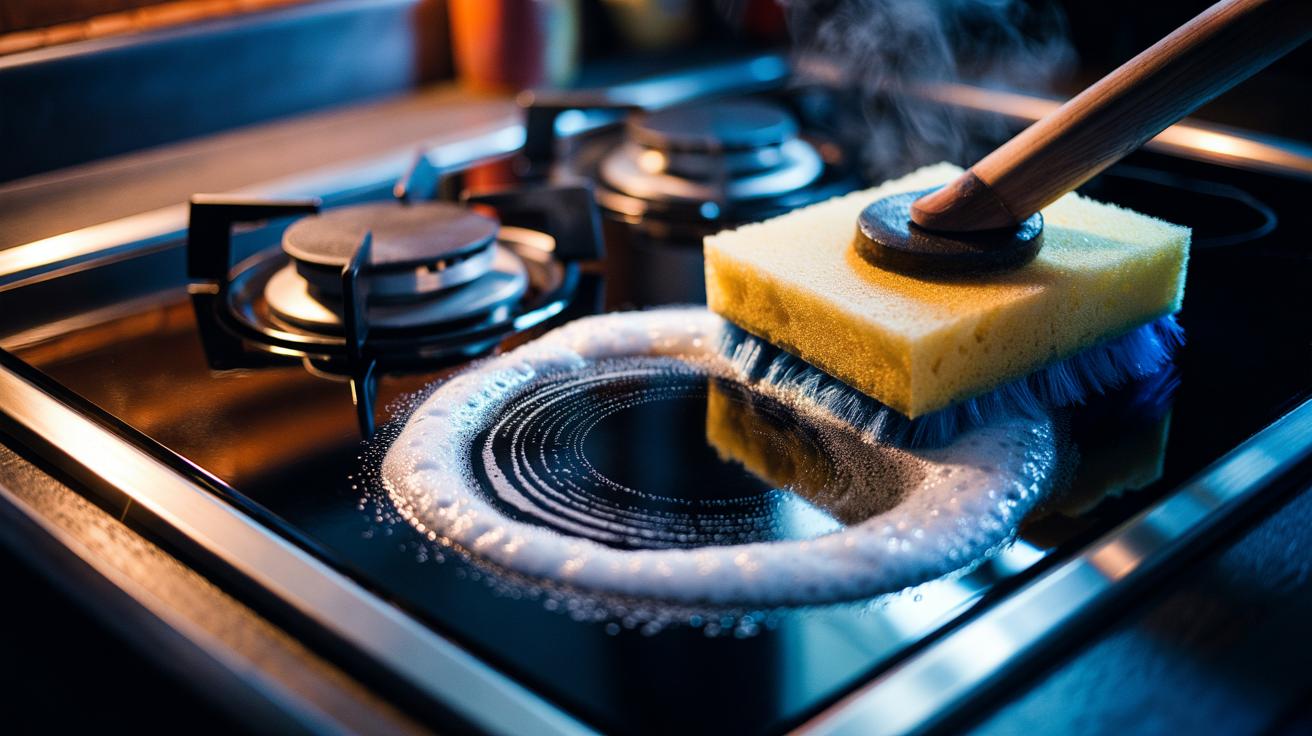
Grease rings, sugary scorch, that stubborn halo around the burners—most hobs collect a week’s worth of culinary memories in a single evening. Yet the remedy is sitting in the cupboard. A simple baking soda paste—what we Brits call bicarbonate of soda—delivers instant stove shine without fumes, fuss, or expensive sprays. Mix, spread, scrub. Done. The chemistry does the heavy lifting; the paste’s fine grit finishes the job. No harsh odour. No eye-watering aerosols. Just a quick scrub that sends stubborn spots packing. In minutes, you’ll reclaim a surface that glows, ready for the next pan to land without a crunch of yesterday’s sauce.
Why Baking Soda Paste Works Instantly
At the heart of this trick is a double act: gentle alkalinity plus micro-abrasion. Bicarbonate of soda is mildly alkaline, so it nudges greasy residues towards saponification—softening oils so they release from the steel, enamel, or glass-ceramic. The grains themselves are tiny, rounded, and forgiving, acting as a micro-abrasive that scuffs residue without gouging the hob. That’s the secret behind the headline result: a quick scrub that feels light yet looks decisive. Add water to form a paste and you’ve engineered a clingy cleaner that stays put on vertical rims and around burner crowns.
Speed matters. Letting the paste sit for a few minutes allows alkaline action to loosen bonds, so when you move in with a non-scratch pad, stains surrender immediately. The approach is safe for most finishes, provided you respect the basics: test an inconspicuous corner, avoid excessive pressure on delicate glass, and follow the grain on stainless steel. The outcome is predictable and repeatable, the kind of routine that makes midweek spruce-ups quicker than hunting for a spray bottle.
No mystery, no magic—just sensible chemistry that tilts the odds in your favour. Crucially, there’s no sticky after-film, because baking soda rinses clean. Your hob ends up visually brighter and tactilely smooth, ready for a quick buff that elevates clean to gleam.
Step-by-Step: Mix, Spread, Scrub, Shine
First, make the paste. Mix three parts bicarbonate of soda with one part cool water. You’re aiming for yoghurt-thick, not runny. Switch off the hob and cool it fully. Brush away crumbs so the paste can target real grime. Spot-test a discreet patch if your surface is new, mirrored, or unusually treated. Now spread a thin coat over rings, splash zones, and caramelised blotches. Leave it to dwell—just a few minutes. That pause is where the magic begins.
| Paste Ratio | Dwell Time | Scrub Tool | Best For |
|---|---|---|---|
| 3:1 (bicarb:water) | 3–5 minutes | Non-scratch sponge | Everyday splatter |
| 4:1 (thicker) | 10–12 minutes | Silicone spatula edge | Burnt sugar or sauces |
| 2:1 (runny) | 2–3 minutes | Microfibre cloth | Stainless polishing |
Scrub with gentle circles. A non-scratch sponge is your default; for stubborn, glass-safe patches, a plastic scraper or silicone spatula gives leverage without risk. Wipe away the grey slurry with a damp microfibre cloth, rinsing it often. Finish with a clean, dry cloth. That 30-second buff is the difference between clean and camera-ready. If you want a showroom finish on stainless, swipe along the grain with a tiny drop of washing-up liquid, then buff dry for a streak-free sheen.
Handling Tricky Stains on Different Hobs
Glass-ceramic and induction tops look unforgiving, yet they respond beautifully to a deliberate, light-handed approach. Spread a modest layer of baking soda paste, wait three to five minutes, then work with small circles and minimal pressure. For brittle caramel or boiled-over sugar, a plastic razor or scraper held at a shallow angle lifts residue cleanly. Never press hard on glass; let dwell time and repetition do the work. Finish with a damp wipe and a dry buff to banish haze.
Stainless steel rewards patience. Follow the grain, not across it, and keep the paste slightly looser so it slides rather than drags. Around gas burners, lift off grates and caps and treat them separately. Grates can take a thicker coat and a longer sit, especially if they’ve collected varnished fat. For enamel, the paste is ideal; it won’t etch and it reaches into orange-peel textures. Do not flood ignition ports or controls—liquid and electrics are uncomfortable companions.
Aluminium rings and trim need nuance. Bicarb is gentle, but aluminium marks easily; use a shorter dwell, a softer cloth, and rinse promptly. On plastic knobs or printed panels, apply paste to the cloth rather than the surface, dabbing rather than scrubbing. The effect is crisp: residues lift, legends stay intact, and the whole hob feels newly minted after a final dry buff.
Smart Add-Ons and Common Pitfalls
If grease feels particularly tenacious, add a single drop of washing-up liquid to your baking soda paste. The surfactant breaks surface tension while bicarb handles softening and scrubbing. For tea stains or pale scorch on light enamel, a few drops of 3% hydrogen peroxide in the mix brightens without drama. Want a squeak-fresh finale? A barely damp cloth misted with white vinegar neutralises any residual alkalinity, then you buff dry. This is about elegant simplicity, not a chemistry set on your worktop.
Now, the traps. A paste that’s too watery slides off and does little; too dry and it crumbles before it cleans. Heavy-handed pressure risks micro-swirls on delicate glass and streaks on stainless. Skipping the dwell time wastes effort, as does missing the final buff. And remember the golden rule: never mix bicarbonate with bleach; you’ll stir up unwanted reactions and volatile gases. If a mark resists, reapply, wait longer, and scrape safely—patience beats force every time.
The payoff is tangible: less faff, lower cost, and no synthetic fragrance fog. The method scales—from a 60-second weekday reset to a deeper weekend refresh—because the tools are literal cupboard staples. Instant stove shine stops being a boast and becomes your new normal.
In a world of neon-labelled cleaners and complicated routines, this humble paste proves that clarity wins. It’s cheap, odour-light, and effective across surfaces, from induction glass to cast-iron grates, shrugging off dried sauces and sticky sugars with unfussy grace. The rhythm is easy: mix, spread, pause, scrub, buff. Five minutes, a tea break, and a hob you’re quietly proud of. Will you stick with the classic three-to-one paste, or fine-tune the ratio, tools, and dwell time to craft your own signature, lightning-fast shine?
Did you like it?4.5/5 (29)