In a nutshell
- 🧺 Stiff towels come from hard-water minerals, excess detergent residue, and fabric softener films that glue loops together, reducing softness and absorbency.
- 🧪 A vinegar rinse uses acetic acid to dissolve limescale and neutralise alkaline soap films, freeing cotton fibres and restoring quick, plush absorbency.
- ⚙️ Use white distilled vinegar (5–8%): 150–250 ml for front-loaders, 200–300 ml for top-loaders, added to the rinse stage (softener drawer), not the wash.
- 🔁 For heavy build-up, do a hot wash with ½ cup bicarbonate of soda (no detergent), then a separate vinegar rinse; dry on medium or line-dry, then fluff.
- ⚠️ Safety and routine: never mix vinegar with bleach, reduce detergent, skip softener, run a monthly vinegar rinse in hard-water areas, and clean the machine to prevent re-deposit.
British bathrooms are full of towels that look luxurious yet feel like sandpaper. Hard water, too much detergent, and years of fabric softener leave behind a stubborn film that glues loops together. The fix is unexpectedly simple, resolutely thrifty, and backed by chemistry: a rinse with household vinegar. When used correctly, acetic acid dissolves mineral crusts, lifts detergent residue, and restores drape. A vinegar rinse can restore plushness in a single cycle. No exotic kit. No costly conditioners. Just a measured pour, a well-timed rinse, and a short dry. Here’s how the science works, why towels turn stiff in the first place, and the safest way to bring back that hotel-soft feel.
Why Towels Turn Stiff: The Build-Up Problem
Stiffness isn’t a mystery; it’s accumulation. In hard-water regions, dissolved calcium and magnesium bind with leftover surfactants to form waxy deposits. These crusts cling to cotton loops, making them clump and feel scratchy. Over-dosing detergent worsens it. So does the habit of adding liquid fabric softener, which leaves a hydrophobic coating. The result? Water struggles to penetrate, towels dry slowly, and fibres lock together instead of blooming after the spin.
Drying practices add a final twist. High heat can bake residues deeper into the pile, exaggerating crunch. Line-drying on breezy days is delightful, but if build-up is present, air-dried towels can feel board-stiff. The core problem is not the cotton; it’s the film sitting on it. Remove the film and softness returns. That is why a targeted, mildly acidic rinse works so quickly—because it attacks the residues themselves rather than masking them with perfumes or oils.
How Acetic Acid Works Inside the Fibres
Vinegar is water plus acetic acid, a weak acid that drops the rinse pH just enough to reset cotton. At a slightly acidic pH, two crucial things happen. First, mineral deposits—think chalky limescale—begin to dissolve. Calcium and magnesium salts loosen, breaking the microscopic “bridges” that make loops feel rigid. Second, acetic acid protonates residual soap and detergent molecules, turning sticky, alkaline films into water-loving compounds that rinse away cleanly. The effect is swift and visible in the drum: clearer rinse water, freer fibres.
The chemistry matters. Cotton’s cellulose is studded with hydroxyl groups; when residues coat them, the pile resists movement and feels harsh. Lowering the pH peels that coating off, restoring fibre flexibility without compromising strength. Because acetic acid is weak and easily rinsed, it cleans without stripping dyes or weakening cotton when used in moderation. The bonus: reducing residual alkalinity curbs musty odours and improves absorbency, so towels drink up water again instead of smearing it around.
Step-By-Step Vinegar Rinse for Instant Softness
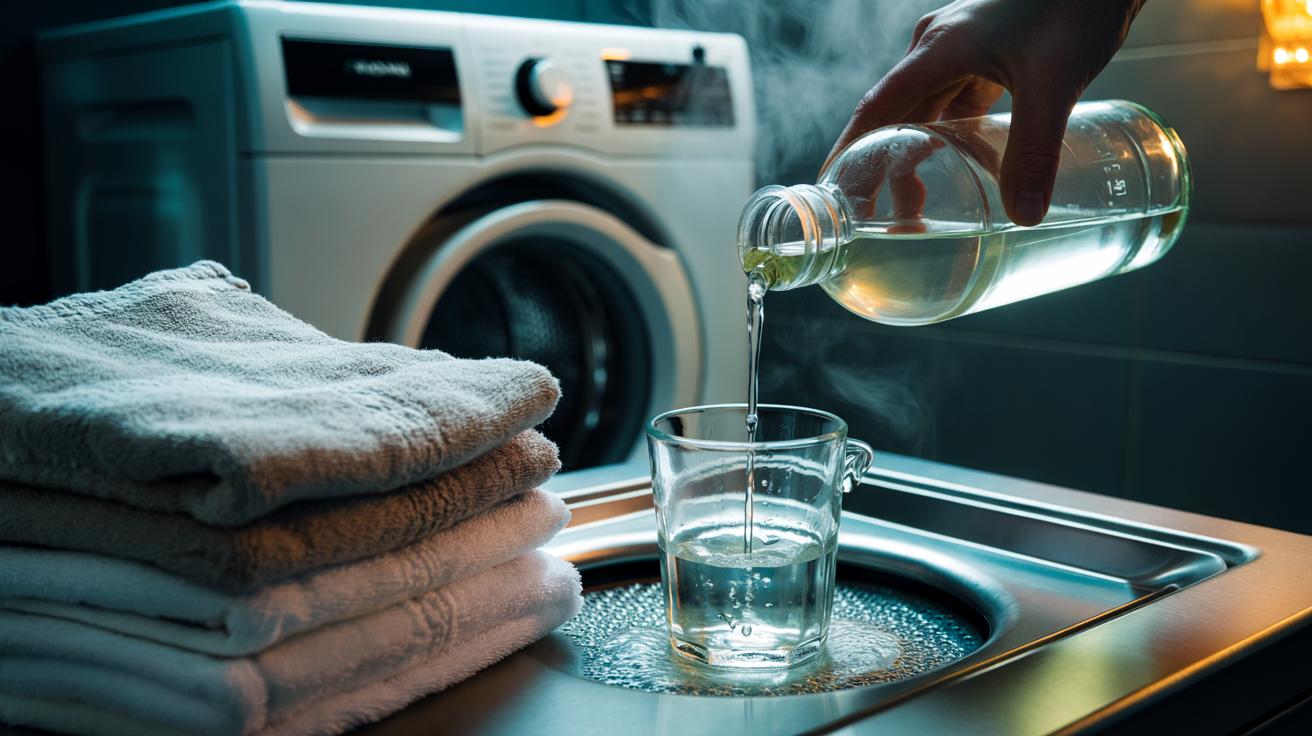
Reach for clear, white distilled vinegar (5–8% acetic acid). Avoid malt or coloured vinegars that can stain. Load clean towels—ideally ones just washed without softener—then add vinegar to the softener drawer so it dispenses during the rinse, not the wash. Add vinegar only in the rinse stage; it needs alkaline residues to react with. Typical volumes: 120–250 ml for a standard load. Heavier build-up? Use up to 300 ml once, then reduce for maintenance.
| Machine Type | Vinegar Amount | Water Temp | Cycle | Notes |
|---|---|---|---|---|
| Front-loader | 150–250 ml | Warm (30–40°C) | Rinse/Extra Rinse | Use softener drawer |
| Top-loader | 200–300 ml | Warm (30–40°C) | Rinse/Deep Rinse | Add during rinse fill |
For extreme stiffness, try a two-part reset: wash once with hot water and ½ cup (100 g) bicarbonate of soda in the drum, no detergent; then re-rinse with vinegar. Do not pour bicarb and vinegar in together—they neutralise and lose cleaning power. Dry on medium heat or line-dry, then fluff briefly in a cool tumble to lift the pile.
Safety Notes, Dos and Don’ts
Vinegar is simple, but laundry still demands care. Never mix vinegar with chlorine bleach. The reaction releases toxic chlorine gas—dangerous in small rooms. Dose sparingly; soaking towels in strong acid isn’t helpful and may dull trims or elastics over time. Choose unscented, clear vinegar. Check care labels on coloured towels and test if you suspect unstable dyes, though cotton towel dyes are usually fast at rinse pH. Keep the rinse warm, not scalding, to protect fibres and save energy.
Build a gentler routine. Use less detergent—modern formulas are potent—and skip liquid fabric softener, which hurts absorbency. A monthly vinegar rinse prevents re-accumulation in hard-water areas; stretch to six to eight weeks if your water is soft. Clean the machine too: a hot maintenance wash with vinegar in the drawer helps keep seals and pipes free of soap scum. Softness is a habit, not a one-off miracle, and this habit costs pennies.
Soft towels aren’t a luxury item; they’re a maintenance choice rooted in chemistry and a few smart habits. A measured dose of acetic acid cuts through limescale, frees cotton loops, and restores that plush, quick-absorbing feel. Keep detergent modest, avoid softener, and give the rinse drawer the starring role. If your bathroom stack has turned stiff and sad, one cycle can change the story by tonight. Are you ready to try a precise vinegar rinse this week—and which towel will you rescue first?
Did you like it?4.6/5 (30)