In a nutshell
- 🧼 Core recipe: trio of white vinegar, bicarbonate of soda, and Castile soap tackles most household grime; optional citrus infusion and distilled water reduce odour and streaks.
- 🧰 How to mix: 1:1 vinegar:water all-purpose spray; 1 tbsp Castile/500 ml degreaser; bicarb paste for gentle scrubbing; vinegar soaks for limescale on taps and showerheads.
- ⚠️ Safety & surfaces: Never mix vinegar with bleach or with Castile in one bottle; don’t premix vinegar with bicarb; avoid acids on marble/limestone; remember cleaning isn’t disinfecting.
- 💷 Pounds and planet: DIY refills cut costs to around £0.08–£0.30 per 500 ml, reduce single-use plastic, and limit synthetic fragrances for calmer indoor air.
- 🏠 Real-world results: UK homes report less clutter, less spend, more shine on glass, stainless, and tiles; microfibre buffing and short dwell times boost finish.
Across Britain, kitchens and bathrooms are quietly ditching a cupboard’s worth of sprays for one simple, low-cost mix. Families cite rising prices, skin sensitivities, and plastic fatigue; professional cleaners talk about speed and fewer fumes. The surprise? Everything you need sits next to the kettle or beneath the sink. This is a recipe you can mix in minutes, store for months, and adapt to almost any surface you actually clean. It’s thrifty. It’s low-waste. And it’s built on a trio of stalwarts our grandparents trusted: white vinegar, bicarbonate of soda, and Castile soap.
The Simple Pantry Ingredients Behind the Trend
At the heart of the movement is white vinegar (about 5% acetic acid). Mildly acidic, it dissolves limescale, soap scum, and mineral haze. Pair it with bicarbonate of soda for a gentle scouring paste on grimy ovens or tiled grout, and you’ve covered 80% of household messes. For greasy pans, cooker hoods, and sticky cupboard doors, a splash of pure liquid Castile soap delivers plant-based surfactants that lift oils without petrol-based additives. Add citrus peels if you’d like fragrance without artificial perfumes, and keep some distilled water on hand to reduce streaks on glass.
There are caveats, and they matter. Never mix vinegar with bleach or with Castile soap in the same bottle. The former releases dangerous gases; the latter simply curdles and cancels out the clean. Instead, think in “zones”: acidic cleaning for mineral build-up and shine; soapy cleaning for fats and food residues; a powder scrub when you need light abrasion. Essential oils? Use sparingly for scent rather than sanitising, because claims about antimicrobial power are often overstated in a real kitchen.
Results look deceptively professional. Vinegar cuts kettle scale and glass haze; Castile handles fingerprints on stainless steel; bicarb lifts baked-on spills. Simple does not mean simplistic. It means letting chemistry do the heavy lifting and your budget breathe.
The Recipe: Make a Versatile Eco Cleaner
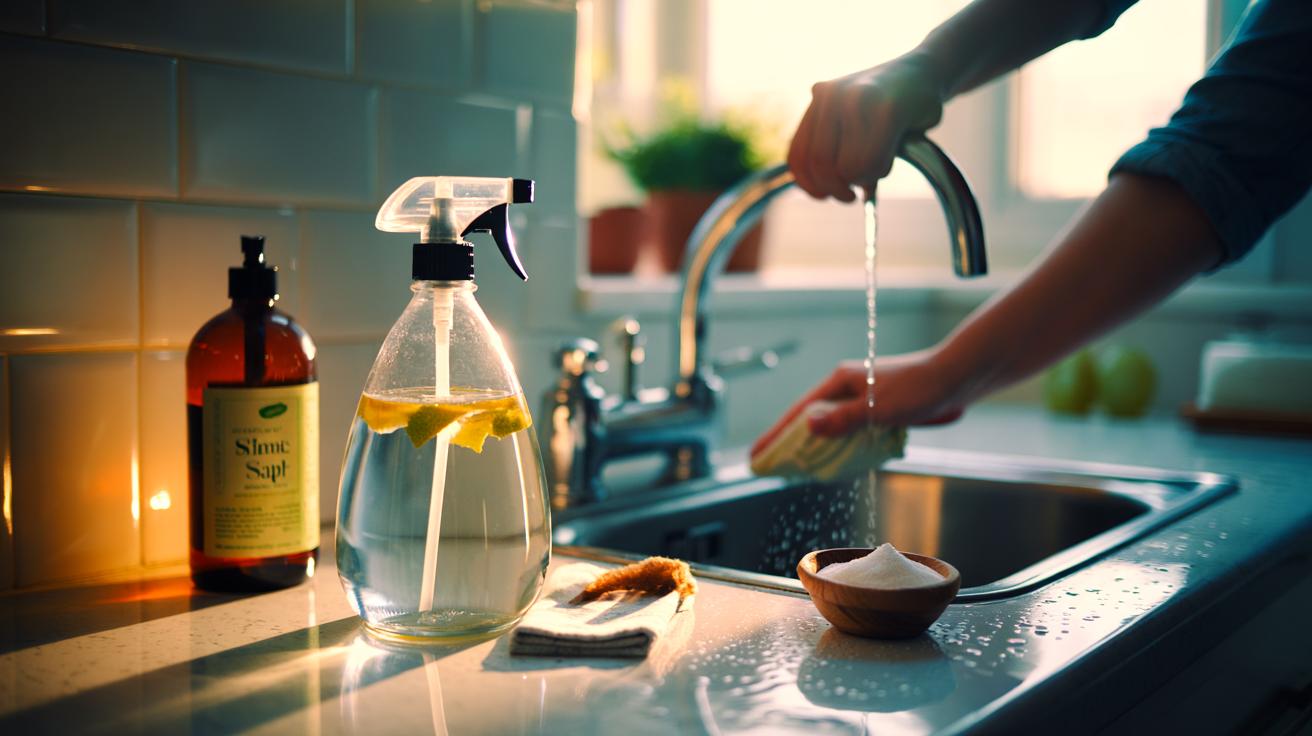
Start with an all-purpose spray for glass, tiles, sealed laminate, and fridge shelves. Infuse a jar of vinegar with clean orange or lemon peels for 7–10 days if you like, then strain. Mix 1 part vinegar to 1 part water in a reused trigger bottle (use distilled water for fewer streaks). Label it. That’s your daily driver. Do not premix vinegar and bicarbonate of soda in a bottle; you’ll neutralise both and build pressure.
For grease, keep a second bottle: 1 tablespoon Castile soap per 500 ml warm water. Shake gently before use. Spray, dwell for 2–3 minutes, wipe with a damp cloth, then buff dry. Need a soft scrub for ovens and baths? Stir 3 tablespoons bicarbonate with enough water to make a spreadable paste; apply, leave 10 minutes, and rinse. For limescale on taps or showerheads, wrap a cloth soaked in straight vinegar for 15–30 minutes, then rinse well.
Where not to use: acidic cleaners on marble, limestone, travertine, concrete, or unsealed stone. For those, stick to the Castile solution and water. Avoid hot surfaces and test finishes in a discreet spot. Vinegar sprays keep for months thanks to their acidity; store away from sunlight and out of children’s reach. Want a quick shine? A microfibre cloth makes all the difference.
Pounds and Planet: What You Actually Save
Households switching to this trio often cite two wins: dramatically lower bills and fewer plastic bottles. You’re no longer paying for water shipped in single-use packaging; you’re mixing at home with concentrates and pantry staples. The greenest cleaning bottle is the one you refill, again and again. Beyond the bin, fewer synthetic fragrances and dyes can mean calmer skin and cleaner indoor air. And because these mixes are versatile, you replace an armful of products with two labelled sprayers and a jam jar of scrub.
| Cleaner | Approx. Cost per 500 ml | Packaging |
|---|---|---|
| DIY All-Purpose (1:1 vinegar:water) | £0.08–£0.20 | Refilled bottle |
| DIY Degreaser (Castile in water) | £0.12–£0.30 | Refilled bottle |
| Branded Multi-Surface Spray | £0.80–£2.00 | New plastic bottle |
| Branded Degreaser | £1.00–£2.50 | New plastic bottle |
Two practical notes. First, cleaning isn’t disinfecting. For everyday dirt, these recipes are excellent; if someone’s ill or you need targeted disinfection, follow product labels or NHS advice for appropriately diluted disinfectants on high-touch areas. Second, avoid over-scenting with essential oils around pets and babies. Used thoughtfully, this approach trims costs, trims plastic, and still leaves metal, glass, and tiles with that squeaky, satisfying finish.
After months of testing in real British homes—hard water, busy families, tiny flats—the verdict is consistent: less clutter, less spend, more shine. The method rewards routine: spray, dwell, wipe, buff. It’s not glamorous, but it is effective, and it turns everyday ingredients into a tidy little system that feels almost subversive in a world of neon bottles and big claims. If you’ve tried the recipe, where did it surprise you most: on your bills, your surfaces, or the air you breathe?
Did you like it?4.6/5 (30)