In a nutshell
- ✨ The vinegar trick relies on acetic acid dissolving mineral films and light oxides for instant shine, while tarnished silver sulphide needs a reduction step to truly brighten.
- 🧽 For stainless steel: soak in a 1:3 vinegar-to-water mix for 5–10 minutes, rinse, dry immediately, and buff along the grain for a streak-free gleam.
- ⚗️ For sterling silver: brief vinegar pre-soak, then a hot bath with aluminium foil, bicarbonate of soda, and salt to transfer tarnish and restore brilliance without abrasion.
- ⚠️ Safety first: avoid soaking carbon steel and aluminium, keep times short for silver-plated items, use warm (not boiling) water, and always spot-test delicate finishes.
- 📋 Practical benchmarks: follow conservative dilutions and short contact times, finish with a thorough rinse and dry, and use distilled water or drawer silica gel to prevent new spots.
Reach for the bottle at the back of the cupboard and watch tired forks, spoons, and knives regain their lustre in minutes. The secret? Everyday white vinegar. Its modest tang hides a powerful cleaning ally: acetic acid that dissolves the drab films of limescale, soap residue, and surface oxides that steal sparkle. A little dilution, a short soak, and a gentle buff are often all it takes. This is the low-cost kitchen chemistry that turns a dull drawer into a dinner-party showcase. No harsh fumes. No elaborate kit. Just simple science, a soft cloth, and a dash of patience.
The Chemistry Behind Vinegar’s Quick Shine
Vinegar’s bite comes from acetic acid, usually 5–8% in household bottles. On cutlery, the grime you see is rarely just dirt. More often it’s a thin crust of mineral deposits from hard water, microscopic food residues, and light metal oxides. Acetic acid reacts with carbonates and loosens oxides, breaking their bond to the metal so they rinse away. That’s why stainless steel leaps back to life after a brief bath; the acid clears the film that scatters light and dulls the finish. Less scattering, more reflection, instant brilliance.
Silver behaves differently. Tarnish on sterling is mainly silver sulphide (Ag2S), a stubborn compound that resists gentle polishing. Vinegar alone won’t “reduce” sulphide back to bright silver, but it does soften residues clinging to the tarnish layer, making subsequent cleaning faster. Pairing vinegar with heat, salt, and a reduction step using aluminium foil and bicarbonate helps shift that tarnish safely. Think of vinegar as the prelude: it lifts the grime, primes the surface, and lets the real chemistry sing.
There’s physics here, too. When thin films vanish, the smooth metal beneath reflects light coherently, so edges look crisp and flatware snaps with clarity. Stainless glows with a cool sheen; silver returns a warmer, mirror-like flash. In minutes, the table looks curated, not merely set.
Step-By-Step Method for Stainless and Silver
For stainless steel, keep it simple. Mix one part white vinegar with three parts warm water in a deep bowl or tray. Submerge clean cutlery for 5–10 minutes, agitating once or twice. The acid loosens limescale and film with minimal effort. Rinse under warm running water, then dry immediately with a lint-free cloth. Buff along the grain to avoid micro-swirls. For sticky spots on the backs of teaspoons, dab vinegar neat, wait 60 seconds, then wipe. The short contact time does the heavy lifting.
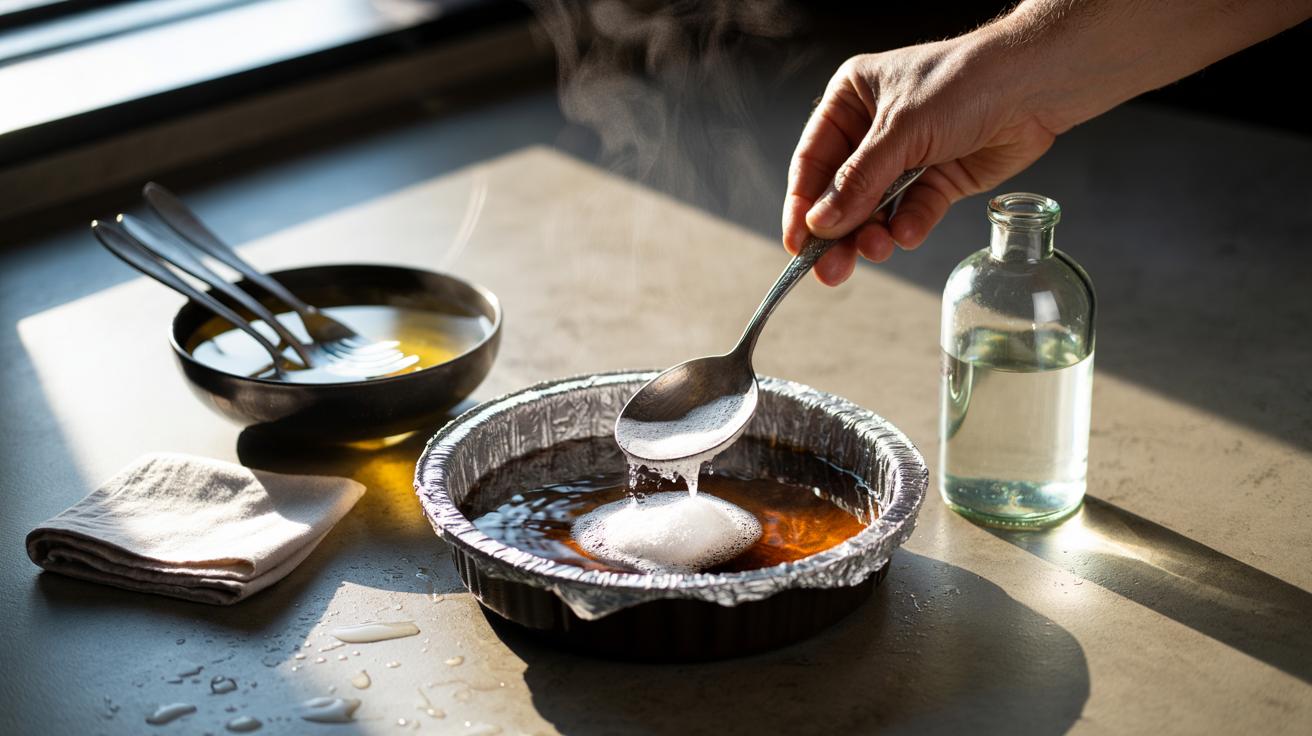
For sterling silver or lightly tarnished plated pieces, use a two-stage approach. First, a pre-soak: one part vinegar to two parts hot water with a pinch of salt for 3–5 minutes. Rinse. Then line a heatproof dish with aluminium foil, shiny side up, and add very hot water. Stir in a tablespoon of bicarbonate of soda per 500 ml and a teaspoon of salt. Lay the silver so it touches the foil. In a few minutes, the sulphide transfers to the foil, reducing tarnish without abrasive loss of metal. Rinse, dry, and buff.
For ornate handles and knives, keep liquid away from glued joints and wood. Wipe with a vinegar-damp cloth rather than soaking. Polishing is the final flourish: a drop of neutral oil on stainless can add depth; a dedicated silver cloth enhances the mirror on sterling. Minimal abrasion, maximum shine.
Safety, Exceptions, and Smart Substitutions
Acid is powerful, so treat it with respect. Avoid long soaks for silver-plated items; thin plating can be vulnerable if the base metal peeks through. Test an inconspicuous area first. Do not soak carbon steel blades—the kind that develop a blue-grey patina—as vinegar may etch and stain. Wipe quickly, rinse, and dry at once if you must treat them. Steer clear of vinegar on aluminium utensils; it can pit and dull the surface. When in doubt, shorten the soak and increase the rinse.
Handle temperature wisely. Heat speeds reactions, but boiling water can warp delicate pieces and loosen vintage adhesives. Warm to hot is enough. White vinegar is preferable to malt or cider varieties, which can impart colour or odour. No vinegar to hand? Try citric acid crystals: dissolve a teaspoon per 250 ml hot water for stainless, halve that for silver pre-soaks. Finish with a thorough rinse to remove residues that could attract new grime. For households with very hard water, a quick final wipe with distilled water helps prevent spots. Clean, dry, protected—that’s the winning sequence.
Recommended Dilutions and Soak Times
Different metals, different rules. The table below offers practical, conservative guidance you can adapt to the condition of your cutlery and the strength of your vinegar. Remember that timing is flexible: cleaner pieces need less, neglected drawers need a touch more. The guiding principle is simple: short contact, swift rinse, careful dry. That protects edges, preserves plating, and keeps handles intact. Let the chemistry work; don’t force it.
| Metal/Finish | Vinegar Dilution | Typical Soak Time | Notes |
|---|---|---|---|
| Stainless steel | 1:3 (vinegar:water) | 5–10 minutes | Buff along grain; optional drop of neutral oil to finish. |
| Sterling silver | Pre-soak 1:2, then foil + bicarbonate bath (no vinegar) | 3–5 minutes + 3–10 minutes | Touch foil to enable reduction; rinse thoroughly. |
| Silver-plated | Mild pre-soak 1:4 | 2–4 minutes | Keep brief; avoid aggressive rubbing on high-wear points. |
| Carbon steel knives | No soak | Wipe only | Quick wipe with diluted vinegar; rinse and dry immediately. |
| Aluminium | Not recommended | — | Risk of pitting and dullness; use neutral soap instead. |
| Nickel silver/brass | Spot test 1:5 | Under 2 minutes | May alter patina; prefer a specialised polish. |
If you encounter rainbowing on stainless after cleaning, that’s typically a thin oxide film. A second, even shorter dip followed by a meticulous rinse and dry usually resolves it. For stubborn tea or coffee tannins in spoons, dab neat vinegar, wait a minute, then buff with a soft cloth and rinse. Store clean cutlery bone-dry to slow future film formation. Slip silica gel sachets into drawers to keep humidity down. Prevention saves polish time.
There’s a quiet pleasure in restoring shine with something as humble as vinegar. It’s frugal, fast, and oddly satisfying—the kind of domestic alchemy that pays off every time guests sit down and notice the gleam. With a measured soak, a mindful rinse, and a patient buff, acetic acid turns lacklustre into luminous without fuss. Your tableware looks cared-for, not just cleaned. Will you try the quick dip tonight, or will you plan a weekend reset with the full two-stage routine and see just how bright your cutlery can get?
Did you like it?4.5/5 (26)