In a nutshell
- 🫒 Evidence-backed benefits: extra-virgin olive oil (EVOO) is rich in monounsaturated fats and polyphenols (oleocanthal, hydroxytyrosol), linked to improved lipids, lower inflammation, and reduced cardiovascular events in studies like PREDIMED.
- 🔥 Cooking myths debunked: EVOO’s typical 190–210°C smoke point and strong oxidative resilience make it suitable for sautéing, roasting, and shallow-frying when not overheated or repeatedly reused.
- 📊 Smart comparisons: EVOO outperforms rivals by combining heart-smart fats, antioxidants, and flavour; rapeseed is a solid everyday option, while sunflower (standard) skews omega‑6 and coconut is high in saturated fat.
- 🛒 Buy and store right: Seek harvest dates, dark glass, reputable producers, and PDO/PGI marks; store cool and dark; a peppery bite signals higher polyphenols and freshness.
- 🍽️ Practical wins: Make EVOO your default cooking fat, finish dishes with a drizzle, and use baking swaps (75–80% of butter volume) to enhance satiety and drive more veg, pulses, and whole grains onto the plate.
For years, British kitchens have argued about the best fat to cook with. Butter for flavour. Coconut for trend. Seed oils for price. Yet a growing chorus of nutrition scientists and chefs point to one quiet champion: extra‑virgin olive oil. It’s not a wellness fad; it’s a foundation stone of the Mediterranean diet, linked to better heart outcomes and longevity in major cohort studies. Rich in monounsaturated fats and protective polyphenols, it performs in the pan and on the plate. Swap your default cooking fat to extra‑virgin olive oil and the health and flavour dividends can be immediate. Here’s what the evidence says, what to buy, and how to use it without fear of smoke points or soggy roasties.
The Olive Oil Advantage: What Science Really Shows
Start with the basics. Extra‑virgin olive oil (EVOO) delivers a high proportion of monounsaturated oleic acid, which supports healthy blood lipids when it replaces saturated fat. It also carries bioactive compounds such as oleocanthal and hydroxytyrosol. These polyphenols act as antioxidants, limiting the oxidation of LDL particles — a process implicated in atherosclerosis. In the landmark PREDIMED trial, a Mediterranean diet enriched with EVOO was associated with a reduction in major cardiovascular events versus a low‑fat control. That’s a population‑level signal, not a miracle cure, but it’s compelling.
What makes EVOO different is not only its fat profile but its protective plant chemicals, which survive normal cooking and carry measurable benefits. Small clinical studies show improvements in inflammatory markers and endothelial function when EVOO replaces saturated fats. In everyday terms, that could mean better vascular flexibility and a lower inflammatory burden. For people watching weight, there’s a behavioural twist: EVOO’s flavour and mouthfeel can enhance satiety, helping modest portions satisfy. And unlike some refined oils stripped of character, good EVOO brings peppery depth, encouraging more vegetables, beans and whole grains to take centre stage. That’s a health multiplier hiding in plain sight.
Heat, Smoke Points, and Everyday Cooking Myths
Let’s retire a persistent myth. Many believe EVOO burns too quickly for real cooking. That’s inaccurate. Fresh, quality extra‑virgin typically smokes around 190–210°C, while common hob and oven techniques sit comfortably below that. Stir‑fries at home usually hover near 160–180°C, roasting veg around 180–200°C. Crucially, stability isn’t just about the smoke point; it’s about oxidative resilience. EVOO’s monounsaturates and polyphenols make it remarkably stable under domestic heat, often outperforming refined seed oils in oxidation tests.
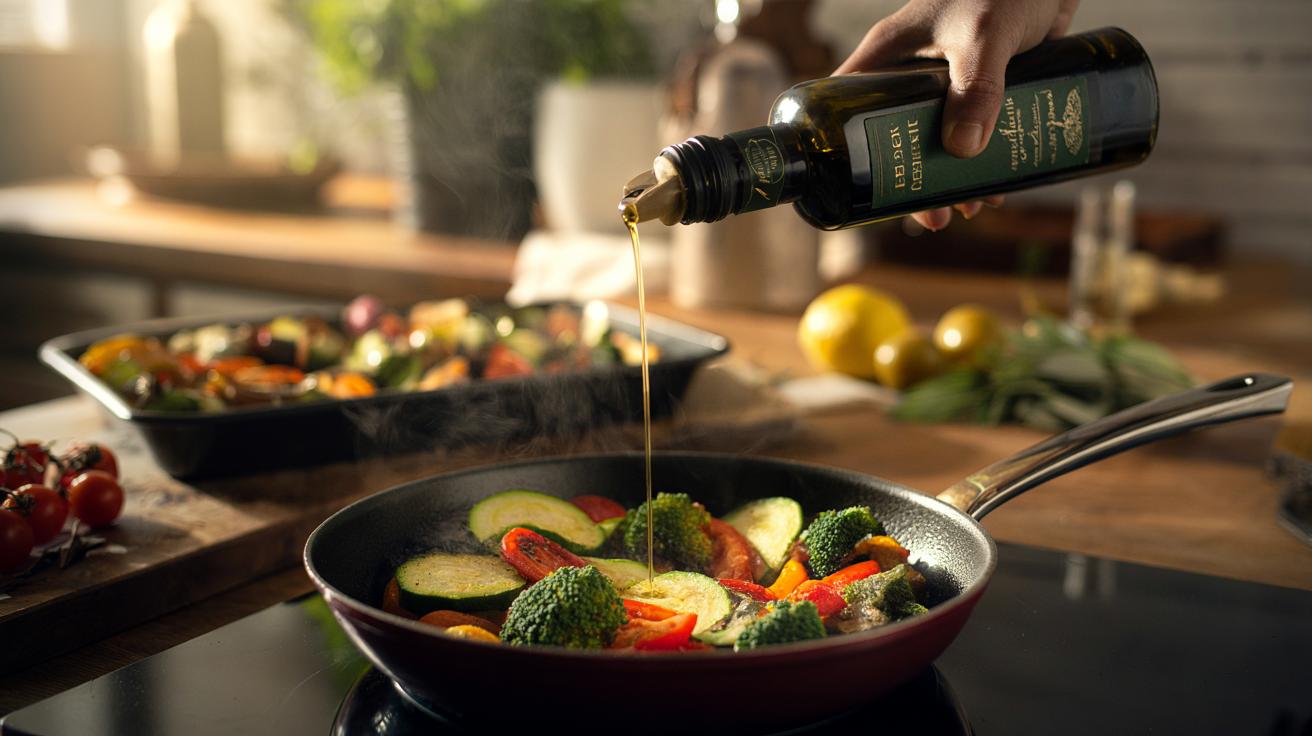
You can sauté, roast and even shallow‑fry with EVOO without sacrificing health — provided you avoid overheating and reuse oils sparingly. Practical tips help. Use a wide pan so moisture escapes and temperatures stay even. Preheat gently; scorching is what damages oils. For high‑heat browning, choose fresher oil with robust, peppery notes — a sign of polyphenols that temper heat‑induced breakdown. Save delicate, grassy oils for finishing soups, fish and salads, where you’ll preserve aroma and maximise antioxidant intake. If deep‑frying is on the menu, consider high‑oleic varieties or refined olive oil for economy, but reserve extra‑virgin for dishes where flavour earns its keep.
How It Compares: A Quick Look at Oils
Shoppers face a crowded shelf: olive, rapeseed (canola), sunflower, coconut, avocado. Each has a story. The healthiest choice balances fat quality, antioxidant content and kitchen performance. EVOO ticks all three boxes in a way few rivals do. Rapeseed oil is also a sensible option in the UK, with favourable monounsaturates and useful omega‑3 ALA, though it’s usually refined and lower in polyphenols. Coconut oil? Aromatic, yes, but rich in saturated fats, which the NHS advises limiting. Standard sunflower oil leans heavily on omega‑6; fine in moderation, but balance matters.
| Oil | Main Fat Profile | Typical Smoke Point (°C) | Antioxidants | Notable Notes |
|---|---|---|---|---|
| Extra‑virgin olive oil | High MUFAs (oleic acid) | 190–210 | Rich in polyphenols | Stable in home cooking; bold flavour |
| Rapeseed (canola) | High MUFAs; some omega‑3 ALA | 200–230 (refined) | Low | Neutral taste; good everyday option |
| Sunflower (standard) | High omega‑6 PUFA | 225 | Low | Prone to oxidation vs high‑oleic types |
| Coconut | High saturated fat | 175–200 | Very low | Flavourful but not heart‑friendly |
On balance, EVOO offers the strongest blend of heart‑smart fats, antioxidants and culinary versatility. Labels vary, as do processing methods, so treat smoke points as ranges, not absolutes. If budget is tight, mix strategies: cook with rapeseed, finish with an aromatic EVOO to capture both thrift and benefits.
How to Buy, Store, and Cook for Maximum Benefit
Good oil starts with good sourcing. Look for harvest dates, not just “best before”. Seek dark glass bottles and reputable producers; EU PDO/PGI marks can signal origin integrity. Freshness matters, because polyphenols decline over time. Store like wine: cool, dark, tightly sealed. Not next to the hob. Not on a sunny shelf. Buy sizes you’ll finish within a couple of months, then refresh. Taste tells: bitterness and a peppery tickle mean polyphenols are present.
Use EVOO as your default cooking fat, then reserve a fruitier bottle for finishing and salads. Roasting veg? Two tablespoons, sea salt, 200°C until caramelised. Sautéing fish? A thin sheen in a hot pan, then finish with a fresh drizzle. Baking? Replace butter with 75–80% the volume of oil and add a splash of milk for moisture; cakes turn tender and lighter in saturated fat. Dress pulses and grains warm, so they absorb flavour and encourage you to eat more fibre. That’s the transformative trick: the oil makes wholesome food taste irresistible, and your routine quietly shifts toward healthier patterns.
For UK households, the case is now persuasive: extra‑virgin olive oil brings science‑backed benefits and daily practicality, without demanding chef‑level skills or a Mediterranean postcode. Small switches compound. A different fat in your frying pan. A generous gloss over veg. A peppery finish on soup instead of cream. Change the oil, and you often change the meal — and the habits that shape long‑term health. Ready to test it in your kitchen this week — and which dish will you upgrade first?
Did you like it?4.3/5 (24)