In a nutshell
- ⚡ A speedy rice clean pulls out stubborn coffee oils and residue via adsorption, refreshing flavour in about 30 seconds.
- 🛠️ The method: 20–30 g plain white rice, medium-fine setting, short 2–3 s pulses, tap and vacuum, then purge with 5–10 g coffee.
- 🌾 Choose low‑oil grains—white long‑grain, jasmine, or instant; avoid brown and arborio; check manuals or use cleaning pellets if required.
- 🧼 Gentle abrasiveness lifts build-up and reduces static and clumping, but keep doses small, stay dry, and stop if the motor strains to protect burrs.
- 📅 Maintain a routine: a brief weekly purge, monthly deep clean, and shorter intervals after dark roasts to stabilise extraction and flavour.
The fix for a sluggish, rancid-tasting brew can be hiding in your pantry. A quick blast of uncooked rice through a grinder pulls out stubborn coffee oils and powdery residue in seconds, leaving burrs fresher and shots brighter. It’s swift. It’s cheap. And, used correctly, it’s safe for domestic kit. The trick relies on the grain’s porous structure and gentle abrasiveness to scrub and adsorb debris without harsh chemicals. Thirty seconds of careful pulsing can reset flavour and restore consistency. Here’s how the method works, what to use, what to avoid, and why this low-tech remedy punches above its weight in a modern coffee routine.
How Rice Works Inside Your Grinder
Think of each grain as a tiny sponge with grit. Dry rice contains starches and micro-pores that wick oils, while its edges lightly abrade caked grounds clinging to burrs, chutes, and ledges. Unlike water, which risks corrosion, or soap, which is a flavour nightmare, rice travels the same pathway as beans and carries contamination out with it. The crucial action is adsorption: oils cling to starch surfaces, lifting off rancid films that flatten flavour. That’s why shots often taste cleaner immediately after a rice purge.
Friction matters too. As rice fractures, it creates fresh surfaces that mop up residue. The fragments are hard enough to dislodge build-up yet softer than the steel found in most burr sets. This balance delivers a controlled scrub rather than a grindstone effect. Rice dust also captures ultrafine coffee particles that encourage static and clumping, reducing the gritty “mud ring” under the burr carrier.
There are limits. Excess force or very hard grains can stress motors or chip brittle edges on worn burrs. Manufacturers design grinders for beans, not grains. Moderation, correct grain choice, and short pulses keep the process gentle. Get those right, and you’ll reclaim clarity without a strip-down.
The 30-Second Method, Step by Step
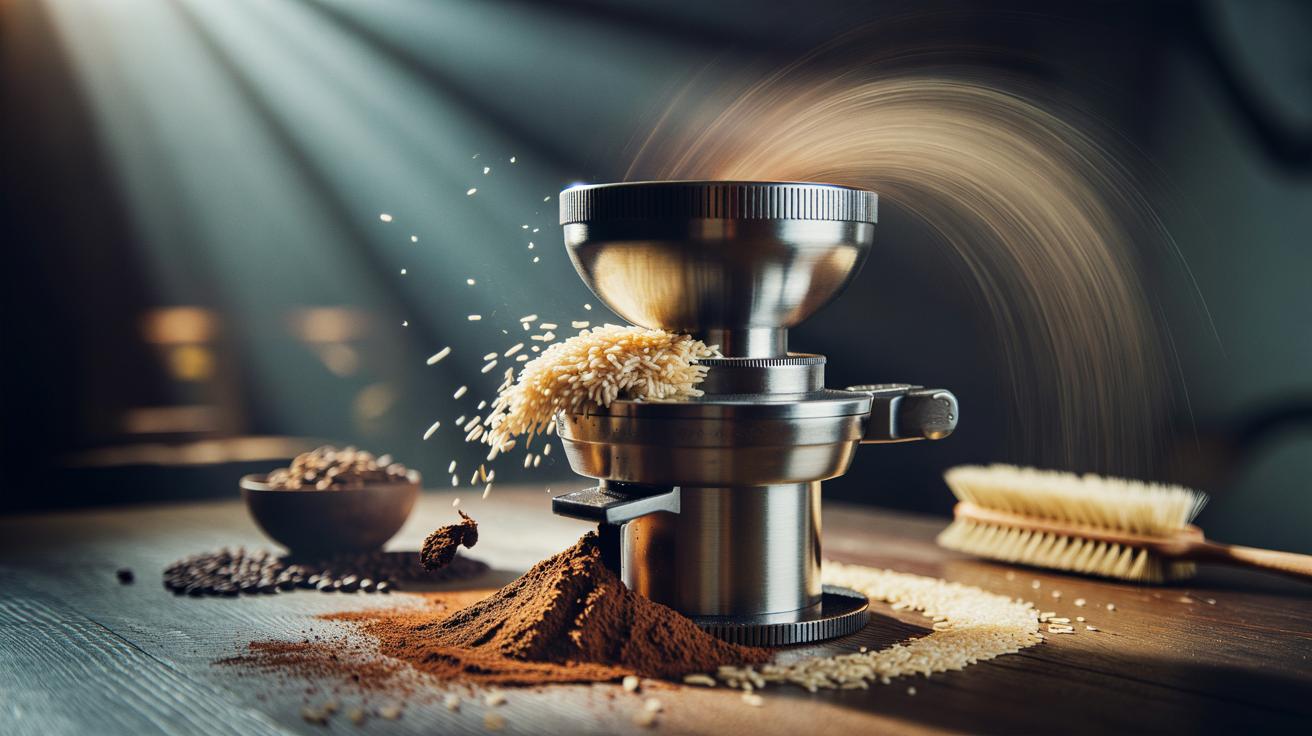
Start with an empty hopper and a dry grinder. Measure 20–30 g of plain white rice for espresso burrs, up to 50 g for larger filter grinders. Avoid brown rice, which is oilier. Set the grinder to a medium-fine setting; too fine clogs, too coarse reduces contact. The aim is maximum contact time with minimal strain.
Pulse, don’t run. Use short bursts of 2–3 seconds, pausing between pulses. Listen for the pitch: it will rise as grains fracture and the load lightens. If the motor labours, stop and reduce the dose. After 15–20 seconds of pulsing, switch off and tap the body to dislodge dust. Remove the hopper if possible and vacuum the chute; a small brush clears corners. Follow with 5–10 g of sacrificial coffee to purge lingering starch.
Time it. The active grinding should total about 20–30 seconds, not more. That’s enough to scour burr faces, sweep vanes, and collect residue without heat build-up. Consistency beats enthusiasm: a brief weekly pass maintains performance, while a monthly deeper clean—partial disassembly if your model allows—keeps tolerances tight. Never add water straight after rice; let everything stay dry until the next brew cycle.
Choosing the Right Grain and Avoiding Pitfalls
Not all rice behaves the same. You want low oil content, moderate hardness, and fractures that create fresh, absorbent surfaces. Plain white long-grain or jasmine fits the bill for most home grinders. Instant rice is softer and gentler for compact motors. Skip arborio and brown varieties; they’re either too sticky or too oily. The right choice preserves burr edges and boosts oil capture.
| Rice Type | Absorbency | Abrasiveness | Risk Level | Notes |
|---|---|---|---|---|
| White long-grain | High | Moderate | Low | Balanced for routine purges |
| Instant/minute rice | Medium | Low | Very low | Good for small motors |
| Jasmine | Medium-high | Moderate | Low | Fractures cleanly |
| Brown rice | Low | Moderate | High | Natural oils linger |
Read the manual. Some brands advise against grains entirely, preferring purpose-made cleaning pellets. If your grinder is under warranty, follow that guidance. Keep doses small, avoid high-torque continuous grinding, and never use wet rice. If you hear metal-on-metal chirping, stop immediately. Technique and restraint make the hack safe and effective.
When Rice Isn’t Right: Alternatives and Maintenance Schedule
Commercial pellets, often starch-based and food-safe, are engineered to match bean hardness while maximising oil uptake. They run clean and create less dust than pantry rice. Stale bread cubes work in a pinch for blade grinders, though they can shed crumbs. For deep cleans, remove the hopper and upper burr, brush thoroughly, vacuum the chute, and wipe accessible surfaces with a dry microfibre cloth. Reserve water and detergents for parts the manufacturer labels washable.
Choose a schedule that suits your habit. Daily espresso? A light weekly purge plus a monthly deep clean keeps extraction predictable. Weekend filter brews only? Fortnightly is fine. After dark roasts, which shed more oil, shorten the interval. Track taste and texture: if shots run slow, clump, or taste ashy, contamination is building. A quick rice or pellet pass buys you time until the next strip-down.
Be methodical. Label a small jar “grinder cleaning rice” to avoid cooking it. Keep a dedicated brush and a compact hand vacuum nearby. Log burr hours if your grinder supports it; burr wear, not just grime, affects flavour and consistency. Clean kit won’t fix bad beans or technique, but it removes the hidden handicap that masks your coffee’s best self.
Cleanliness is the quiet variable behind bright, sweet cups. A brief dose of rice can shake loose months of invisible build-up, returning definition to espresso and calm to your morning routine. Used with care, it’s a thrifty bridge between full services. Prefer the predictability of pellets? The principle is the same: starch meets oil, flavour improves. What matters is a rhythm you’ll actually keep. How will you adapt this 30-second ritual to your setup—rice, pellets, or a hybrid plan tailored to your beans and brewing style?
Did you like it?4.6/5 (23)