In a nutshell
- 🍞 Use baker’s percentages: 100% flour, 70% hydration, 2% salt, 0.2–0.5% instant yeast; weigh everything and target 24–26°C dough for predictable fermentation.
- 🧪 Follow a forgiving method: 20–30 minute autolyse, add salt and yeast, then gentle stretch‑and‑folds at 30‑minute intervals; bulk until 60–75% rise, shape, proof, and bake with steam or in a Dutch oven.
- ⏱️ Master fermentation control: adjust water temp using the Desired Dough Temp formula, pick yeast level for same‑day or overnight schedules, and prioritise visual signs over the clock; retard in the fridge for flavour and flexibility.
- 🔥 Nail the bake: preheat to 240–250°C, steam for the first 20 minutes, then finish at 230°C until deeply bronzed; score at 30–45° and cool at least an hour for a clean crumb.
- 🛠️ Troubleshoot and tweak: fix dense crumb by extending bulk, cure gummy centres by lowering heat and baking longer, boost crust with more steam; add 15–25% wholemeal, soaked toasted seeds, a touch of olive oil, or a flavour‑building poolish.
Every baker has a story about a loaf that slumped, split, or somehow tasted of disappointment. Here’s the antidote: a no‑fail bread recipe anchored in ratios, temperature, and simple techniques that work in a British kitchen on a wet Tuesday or a blazing August. It’s unfussy, repeatable, and quietly elegant. Always weigh ingredients. That one practice eliminates guesswork. The rest is a rhythm: mix, rest, fold, proof, bake. With a few minutes’ attention at the right moments, you’ll coax a crackling crust, open crumb, and a fragrance that lingers. Consider this your dependable template—one you can keep plain, seed‑speckled, or enriched.
The No-Fail Formula: Ratios, Texture, and Timing
The secret is not mystical. It’s mathematical. Professional bakers rely on baker’s percentages, measuring every ingredient as a percentage of flour. For a versatile, lean loaf, aim for 70% hydration, 2% salt, and 0.2–0.5% instant yeast depending on your timetable. This hydration sweet spot keeps dough manageable yet lively, producing a tender, glossy crumb without turning your counter into a swamp. Consistency follows ratio. Once you lock in the formula, texture follows, and timing becomes predictable. Expect a soft, slightly tacky dough after mixing, then a silkier, elastic mass after two gentle folding sessions. The rise should be confident, not frantic; the surface should show fine bubbles and a slight dome before shaping.
| Component | Baker’s % | 1 Loaf (g) | Notes |
|---|---|---|---|
| Strong white flour | 100% | 500 | High protein, 12%+ preferred |
| Water | 70% | 350 | Adjust ±10 g for seasonal humidity |
| Salt | 2% | 10 | Fine sea salt dissolves evenly |
| Instant yeast | 0.2–0.5% | 1–2.5 | Lower for overnight, higher for same‑day |
Temperature is your metronome. Target dough at 24–26°C for reliable fermentation. If your kitchen’s cold, use slightly warmer water; in a heatwave, cool it down. With that set, the rest—flavour, lift, crust—falls neatly into line.
Method That Forgives: From Mix to Bake
Combine flour and water first and let them sit for a 20–30 minute autolyse. This simple pause jump‑starts gluten, making the dough easier to handle and more flavourful. Add salt and yeast, then mix until the dough looks cohesive—three minutes by hand, two minutes on low in a mixer. The dough should be slightly sticky, never dry. If it feels like putty, you’re on track. Resist the urge to dump in extra flour. Instead, rely on technique: perform two or three stretch‑and‑folds at 30‑minute intervals during the first 90 minutes of bulk fermentation. Each gentle set strengthens structure without overworking.
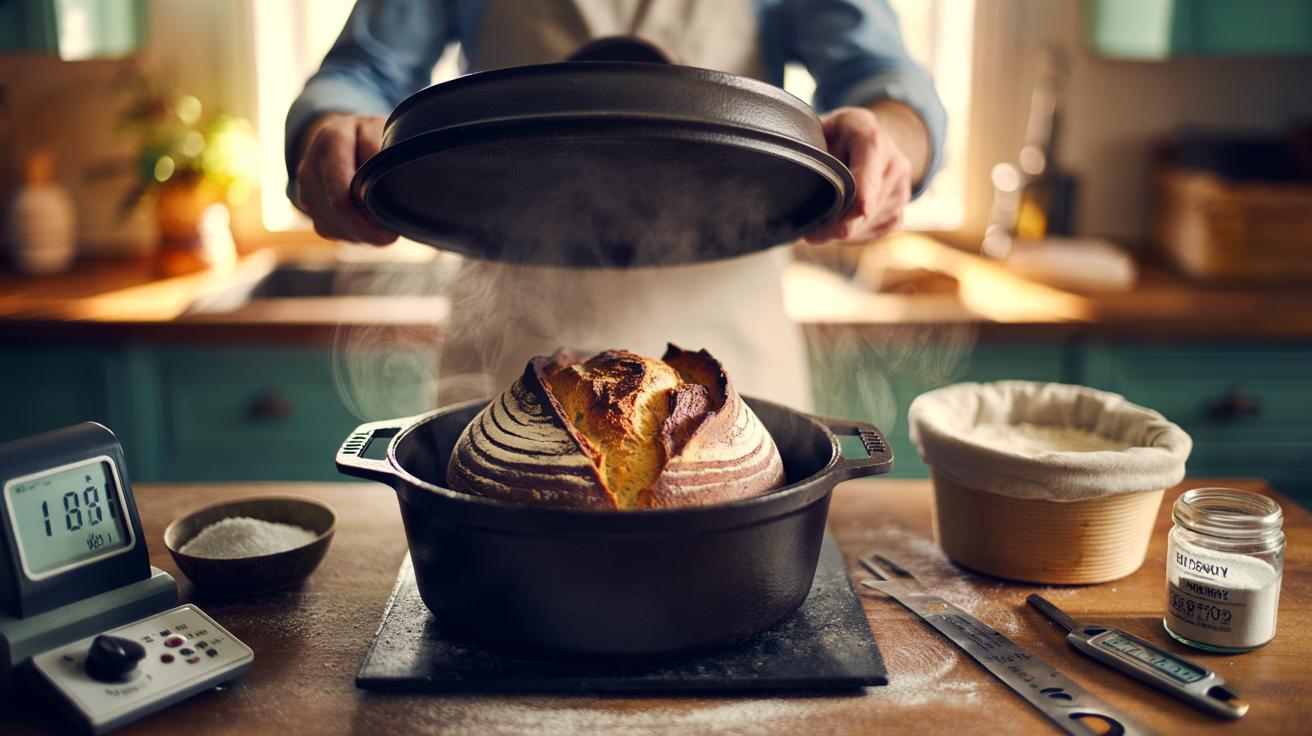
Let the dough rise until it’s roughly 60–75% larger, with a billowy feel and bubbles collecting at the edges—usually 1.5–2.5 hours at 24°C. Tip onto a lightly floured surface, pre‑shape into a loose round, rest 20 minutes, then shape tightly into a batard or boule. Place seam‑up in a floured banneton or a lined bowl. Proof 45–75 minutes at room temperature or retard overnight in the fridge for deeper flavour and easier scoring. Heat the oven to 240–250°C. Bake on a stone or in a preheated Dutch oven. Steam is crucial: 20 minutes covered or with added steam, then 18–22 minutes uncovered at 230°C until deeply bronzed. Let it cool at least an hour before slicing.
Fermentation Control: Temperature, Time, and Yeast
Great bread is a dance between time and temperature. Warmer dough ferments faster; cooler dough gives you headroom and flavour. Use the classic water‑temperature guide: Desired Dough Temp × 3 minus the sum of room temp, flour temp, and friction factor (about 5°C by hand, 8–10°C by mixer). It sounds technical, but it’s simply steering the process. For a same‑day loaf, choose the higher yeast end (around 0.5%) and keep dough near 24–26°C. For a calmer schedule and a richer aroma, drop to 0.2% yeast and let the fridge handle the timeline overnight. If in doubt, slow it down in the fridge.
Signs matter more than the clock. You want a dough that’s aerated, resilient, and slightly jiggly, not puffed to bursting. If the loaf spreads, your proof overshot—reduce final proof or shape tighter next time. If the ear won’t bloom after scoring, increase steam or proof a touch longer. Keep notes on room temperature, dough temperature, and rise times. Within two or three bakes, your pattern emerges, and those once‑mysterious variables become reassuringly routine.
Troubleshooting and Variations That Still Work
Dense crumb? Likely under‑proofing, cool dough, or timid heat. Let bulk fermentation run longer, and verify your oven hits full temperature before the loaf goes in. Gummy centre with a dark crust points to a hot bake and too short a finish; drop the temperature slightly and extend by five minutes. A pale, soft crust suggests not enough steam or heat; preheat harder, add steam early, and vent late. Score decisively at a 30–45° angle to guide expansion and avoid side splits. If the base scorches, slide a spare tray onto a lower rack as a heat shield.
For flavour without fuss, swap 15–25% of the flour for wholemeal and add 10–20 g water to match. Seeds? Toast first, then soak to stop moisture theft. A tablespoon of olive oil and a teaspoon of honey will soften the crumb without erasing structure. Feeling adventurous? Build a quick poolish: equal parts flour and water from the recipe with a pinch of yeast, left 8–12 hours, then mix as normal. The no‑fail core survives these tweaks because the ratios, temperature discipline, and gentle handling do the heavy lifting.
Bread rewards attention, not anxiety. With a clear formula, a steady temperature, and calm hands, you’ll produce loaves that crackle, sing, and slice cleanly, week after week. Treat this recipe as a base camp for your baking—secure enough to return to, generous enough to explore from. Keep your notebook, trust your senses, and let time do its quiet work. The method is simple; the results feel anything but. What will you change first: a night in the fridge for deeper flavour, a handful of toasted seeds, or a switch to a chewier, higher‑hydration crumb?
Did you like it?4.5/5 (28)