In a nutshell
- 🌶️ Asafoetida (hing) is a dried resin that, when bloomed in hot oil, releases delicate sulphur compounds mimicking onion/garlic and delivering deep umami to any dish.
- 🍳 Practical use: perform the tempering step—add a pinch (1/8 tsp) to shimmering oil for seconds, then your base; best partners include cumin, mustard seeds, and turmeric; start small and build.
- 🥗 Versatility and diet: a low-FODMAP workaround for alliums and a vegan route to meaty savouriness; it elevates dal, roast vegetables, tomato sauces, and eggs with minimal effort.
- 💷 Value and time: a true budget saver that creates restaurant-level flavour fast, making tinned beans, leftover rice, and brassicas taste slow-cooked and luxurious.
- 🫙 Pro tips: choose pure resin or gluten-free blends, store airtight, use a dedicated spoon, avoid scorching, and pair with butter, olive oil, or mustard oil to tailor the finish.
There’s a jar in the back of many spice cupboards that smells alarming but cooks like a dream. Meet asafoetida, known as hing across South Asia. Used properly, it turns everyday food thrilling: vegetables shine, beans taste buttery, soups feel longer simmered than they are. This is the quiet shortcut to deep, restaurant-level umami without a drop of stock. A tiny pinch, bloomed briefly in hot oil, unlocks savoury-sweet notes that echo onion and garlic while adding something mysterious of its own. It’s thrifty. It’s fast. And once you’ve learned its rhythm, you’ll notice how dull dinner felt before.
What Asafoetida Is and Why It Works
Asafoetida is the dried resin of the Ferula plant, ground into a pungent powder. Many supermarket jars are “compounded” with rice or wheat flour to tame its intensity; the pure resin hits harder, so a smaller dose goes further. Raw, it’s harsh. In hot oil, it blossoms. That bloom releases delicate sulfur compounds which mimic the warmth of onions and garlic, while lifting earthy flavours in lentils, brassicas, and mushrooms. Think of it as a fast-track to complexity that balances sweetness, bitterness, and salt.
This chemistry explains why cooks across India bloom hing with cumin, mustard seeds, or turmeric at the start of a dish. Five to ten seconds is enough; any longer can scorch and turn acrid. Because it’s potent, measure in pinches—⅛ teaspoon can season a pot. If you’re gluten-avoiding, look for resin or rice-based blends. Keep the jar airtight; light and oxygen dull its perfume. Most importantly, trust the transformation: the scary smell doesn’t survive the pan. What remains is finesse, depth, and irresistible savouriness.
How To Use It in Everyday Cooking
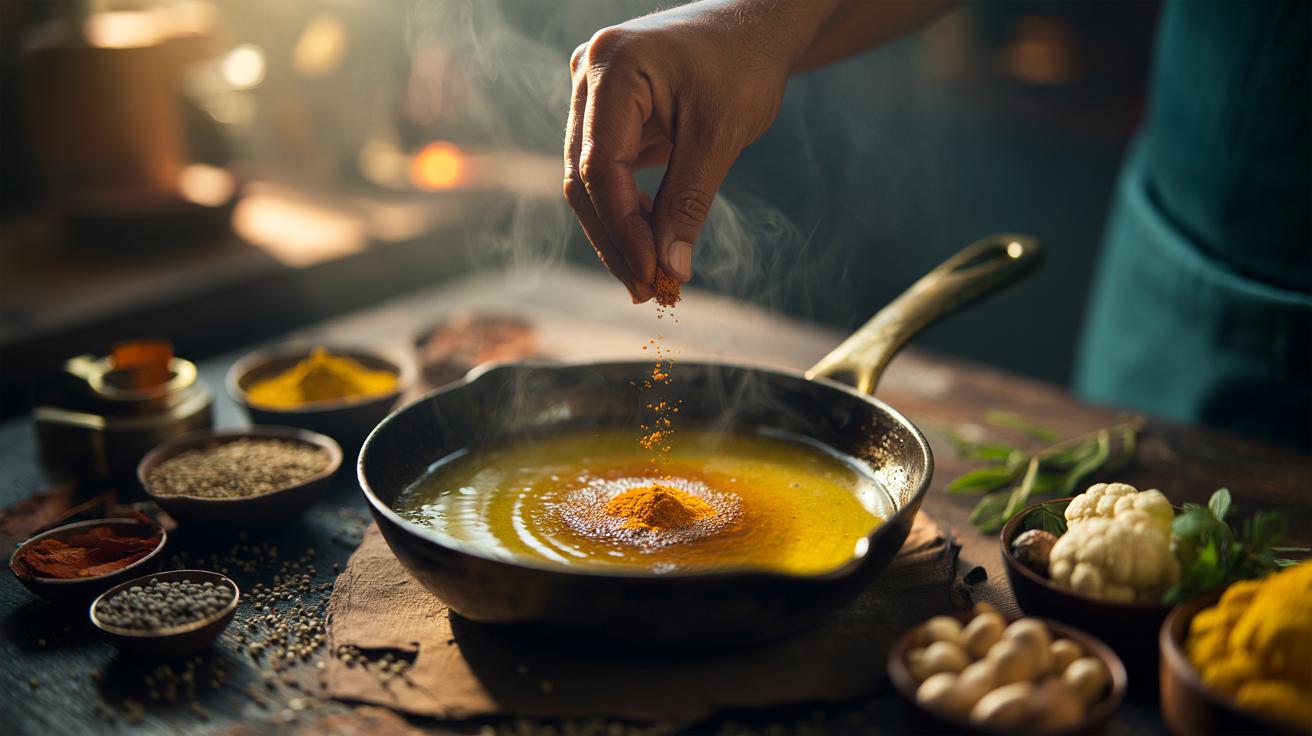
Method matters. Heat oil or ghee until shimmering, add a pinch of hing, stir, then immediately add onions, tomatoes, or your main ingredient. That’s the tempering step. It takes seconds and changes everything. Try it with dal, chickpea stews, tomato sauces, braised greens, or simple buttered potatoes. For roast vegetables, bloom hing in oil, toss with veg, then roast: edges crisp, centres taste sweeter. A pinch in melted butter glossed over boiled eggs is a quiet revolution. Treat it like a top note you add first so everything else can sing in tune.
| Use Case | How Much | When to Add | Best Partners |
|---|---|---|---|
| Dal or bean stew | 1/8 tsp per pot | Bloom in oil at start | Cumin, chilli, turmeric |
| Roast veg | Pinch per tray | Bloom, then toss veg | Potato, cauliflower, carrot |
| Tomato sauces | Small pinch | Bloom before tomatoes | Basil, black pepper |
| Eggs | Pinch in butter | Bloom, then add eggs | Chives, paprika |
Low-FODMAP eaters lean on hing as an onion/garlic workaround; vegans prize its meaty depth without meat. Be gentle with heat and quantity. If in doubt, start tiny. You can’t subtract; you can always add.
From Budget Saver to Restaurant-Level Flavor
A small jar of asafoetida is stealth economy. Because it magnifies natural savoury notes, you can make humbler ingredients taste extravagant. Cheaper cuts, tinned beans, leftover rice—suddenly special. It trims cooking time too: that “all-day simmer” profile appears in minutes. In plant-led cooking, hing gives you the backbone usually provided by bones or aged cheese. It’s a power move for weeknights and a secret weapon for dinner parties.
Practical tips make it sing. Pair with butter for silky sauces; with olive oil for Mediterranean-leaning stews; with mustard oil for punchy pickles. Use it to tame brassica funk, or to round out acidity in lemony dishes. Store the jar inside another container to isolate its aroma from delicate spices. Label your spoon for hing only; the scent clings. Finally, consider sourcing a pure resin and grating tiny shards—its clarity is stunning, and it lasts ages. Balanced right, hing doesn’t announce itself; it quietly convinces you the whole dish is simply better seasoned.
Hing won’t replace your spice rack; it will orchestrate it. A whisper at the start, then everything else finds balance—salt tastes smarter, sweetness more honest, bitterness cleaned up. Once you’ve felt that shift, it’s hard to go back. Keep the jar close to the hob, measure modestly, and trust the bloom. Dinner gets easier, cheaper, deeper. What will you transform first: a humble tin of chickpeas, a pan of buttered greens, or Sunday’s roast potatoes taken somewhere entirely new?
Did you like it?4.7/5 (20)